Lorem ipsum dolor sit amet, conscur adisng elit, sed do eiusmod tempor iniunt ut labore et dolore mana aliqua. Ut enim ad minim veniam, quis nostrud exetation ullco laboris nisi ut aliquip ex ea commodo coequat. Duis aute irure dolor
Russian media has reported that two of the nation’s major energy corporations, EvroSibEnergo and Gazprom, are in discussions with Russian bitcoin miners who are hoping to strike a deal on cheap power. EvroSibEnergoI has reportedly issued statements articulating that although no contracts have been officially been signed, the corporation is open to the possibility of entering into partnership with cryptocurrency miners.
Russia’s Largest Energy Company Has Received “Dozens of Requests” From Russian Bitcoin Miners
Russian media outlets have reported that two major energy corporations have been in discussions with Russian bitcoin miners. The news comes just weeks after Russian state officials announced plans to launch an ICO for a public-private partnership seeking to rival China’s dominance over the bitcoin and cryptocurrency mining industries
According to RT, EvroSibEnergo has received “dozens of requests“ from Russian bitcoin miners seeking to reduce the power costs associated with mining. EvroSibEnergo has stated that “there are over 70 manufacturing facilities with ready-made infrastructure, including quick access to electrical grids and substations, provided with cheap electric power”, which are located throughout Siberia, the Urals, and European parts of Russia.
Miners May Still Be Legally Required to Purchase Their Power Through Russia’s Wholesale Energy Markets
Russian miner, Timofey Ra, is reported to have stated that power costs account for 30 per cent of the costs associated with mining bitcoin, and 15 per cent of the costs associated with generating ethereum. Ra alleges that some miners have already struck preferential deals with power companies, citing per kilowatt prices as low as two rubles ($0.03 USD) – a 62.5% saving off the average price of 4.5 rubles per kilowatt ($0.08 USD).
Dailystorm has reported that despite the private deals between Russian bitcoin miners and energy companies, miners will still be legally obliged to purchase their power through the nation’s wholesale market. Dailystorm states that “by law[,] more than 25 MW of power should be sold through the wholesale market… Miners require 100 kW to 30 MW of power… thus, even if the contract is concluded at a reduced price, it will be necessary to make additional payments in the wholesale market.”
Do you think that Russia will be able to rival China’s dominance of the bitcoin mining industry? Share your thoughts in the comments section below!
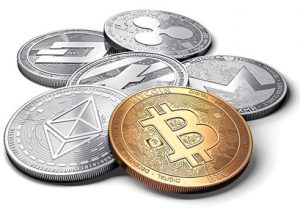
Bitcoin is a form of digital currency, created and held electronically. No one controls it. Bitcoins aren’t printed, like dollars or euros – they’re produced by people, and increasingly businesses, running computers all around the world, using software that solves mathematical problems.
It’s the first example of a growing category of money known as cryptocurrency.
What makes it different from normal currencies?
Bitcoin can be used to buy things electronically. In that sense, it’s like conventional dollars, euros, or yen, which are also traded digitally.
However, bitcoin’s most important characteristic, and the thing that makes it different to conventional money, is that it is decentralized. No single institution controls the bitcoin network. This puts some people at ease, because it means that a large bank can’t control their money.
Who created it?
A software developer called Satoshi Nakamoto proposed bitcoin, which was an electronic payment system based on mathematical proof. The idea was to produce a currency independent of any central authority, transferable electronically, more or less instantly, with very low transaction fees.
Who prints it?
No one. This currency isn’t physically printed in the shadows by a central bank, unaccountable to the population, and making its own rules. Those banks can simply produce more money to cover the national debt, thus devaluing their currency.
Instead, bitcoin is created digitally, by a community of people that anyone can join. Bitcoins are ‘mined’, using computing power in a distributed network.
This network also processes transactions made with the virtual currency, effectively making bitcoin its own payment network.
So you can’t churn out unlimited bitcoins?
That’s right. The bitcoin protocol – the rules that make bitcoin work – say that only 21 million bitcoins can ever be created by miners. However, these coins can be divided into smaller parts (the smallest divisible amount is one hundred millionth of a bitcoin and is called a ‘Satoshi’, after the founder of bitcoin).
What is bitcoin based on?
Conventional currency has been based on gold or silver. Theoretically, you knew that if you handed over a dollar at the bank, you could get some gold back (although this didn’t actually work in practice). But bitcoin isn’t based on gold; it’s based on mathematics.
Around the world, people are using software programs that follow a mathematical formula to produce bitcoins. The mathematical formula is freely available, so that anyone can check it.
The software is also open source, meaning that anyone can look at it to make sure that it does what it is supposed to.
What are its characteristics?
Bitcoin has several important features that set it apart from government-backed currencies.
1. It's decentralized
The bitcoin network isn’t controlled by one central authority. Every machine that mines bitcoin and processes transactions makes up a part of the network, and the machines work together. That means that, in theory, one central authority can’t tinker with monetary policy and cause a meltdown – or simply decide to take people’s bitcoins away from them, as the Central European Bank decided to doing Cyprus in early 2013. And if some part of the network goes offline for some reason, the money keeps on flowing.
2. It's easy to set up
Conventional banks make you jump through hoops simply to open a bank account. Setting up merchant accounts for payment is another Kafkaesque task, beset by bureaucracy. However, you can set up a bitcoin address in seconds, no questions asked, and with no fees payable.
3. It's anonymous
Well, kind of. Users can hold multiple bitcoin addresses, and they aren’t linked to names, addresses, or other personally identifying information. However…
4. It's completely transparent
…bitcoin stores details of every single transaction that ever happened in the network in a huge version of a general ledger, called the blockchain. The blockchain tells all.
If you have a publicly used bitcoin address, anyone can tell how many bitcoins are stored at that address. They just don’t know that it’s yours.
There are measures that people can take to make their activities more opaque on the bitcoin network, though, such as not using the same bitcoin addresses consistently, and not transferring lots of bitcoin to a single address.
5. Transaction fees are miniscule
Your bank may charge you a £10 fee for international transfers. Bitcoin doesn’t.
6. It’s fast
You can send money anywhere and it will arrive minutes later, as soon as the bitcoin network processes the payment.
7. It’s non-repudiable
When your bitcoins are sent, there’s no getting them back, unless the recipient returns them to you. They’re gone forever.
So, bitcoin has a lot going for it, in theory. But how does it work, in practice? Read more to find out how bitcoins are mined, what happens when a bitcoin transaction occurs, and how the network keeps track of everything.
Where to Buy and Sell Bitcoin
Exchange
About
Based
Coinbase operates one of the most popular wallets and is an simple way to buy bitcoin. $5 bonus on sign up.
Moscow Stock Exchange is creating an infrastructure to trade cryptocurrencies such as bitcoin. The exchange plans to trade cryptocurrencies as well as derivatives and exchange-traded funds (ETFs) based on them. This announcement closely follows the plan by Deputy Finance Minister Alexei Moiseev to regulate bitcoin as a financial asset.
Moscow Exchange Embraces Cryptocurrency
Moscow Stock Exchange is reportedly working on creating an infrastructure for cryptocurrency trading, the Russian state-owned news agency Tass was told at a press conference held by the exchange. The exchange was quoted saying:
We are already working on creating an infrastructure for such [cryptocurrency] trades, in particular, a platform for post-trading services for crypto assets.
Moscow Exchange is the largest exchange group in Russia. It operates trading markets in equities, bonds, derivatives, the foreign exchange market, money markets and precious metals. It also operates Russia’s central securities depository and the country’s largest clearing service provider.
Currently, the exchange is in talks with regulators to clarify all legal issues related to how it can trade cryptocurrencies on the Russian exchange market and to protect the interest of their purchasers, the press conference revealed.
Trading Instruments to Be Offered
Moscow Stock Exchange’s cryptocurrency platform will offer a number of trading instruments including derivatives and ETFs based on cryptocurrencies, as well as cryptocurrencies themselves, detailed Russian business publication BFM. The exchange stated:
We are ready to organize trading in financial products for which there is a demand from bidders and their clients and which provide sufficient legal protection…On the stock exchange, it is possible to trade both the cryptocurrencies themselves and derivatives on them, as well as trading stock exchange funds on cryptocurrencies.
A second traditional stock exchange in Russia is also reportedly considering adding cryptocurrency trading to its platform, according to Tass. St. Petersburg Stock Exchange is the third-most active stock exchange in Russia by volume, and the largest outside of Moscow.
Russia’s Efforts to Regulate Cryptocurrency
The exchanges’ moves are in line with the recent announcement by Russian Deputy Finance Minister Alexei Moiseev regarding his proposal to treat bitcoin and other cryptocurrencies as financial assets.
News.Bitcoin.comreported on his interview with Russia 24 TV channel, where he also proposed restricting cryptocurrency trading to qualified investors. Moiseev also revealed on Monday that he had been in discussion with the central bank as well as Moscow Stock Exchange regarding cryptocurrency regulation and trading.
At the press conference, the exchange concurred with deputy finance minister, stating that cryptocurrency trading on its platform will only be allowed for qualified investors, Tass conveyed.
Meanwhile, Russia is still in the process of drafting regulation for digital currency, including how to define it. The draft bill was reportedly delayed due to ongoing discussions regarding its classification.
Do you think cryptocurrencies should be traded on the Moscow’s stock exchange? Let us know in the comments section below? Let us know in the comments section below.





 Moscow Exchange is the largest exchange group in Russia. It operates trading markets in equities, bonds, derivatives, the foreign exchange market, money markets and precious metals. It also operates Russia’s central securities depository and the country’s largest clearing service provider.